In the realm of mechanical parts manufacturing, plastic has long been a popular choice due to its numerous advantages such as low cost, ease of molding, and corrosion resistance. As a seasoned supplier of mechanical parts, I’ve witnessed firsthand the widespread use of plastic in various industries. However, it’s crucial to shed light on the less – talked – about disadvantages of using plastic for mechanical parts. This knowledge can help our clients make more informed decisions when it comes to choosing the right materials for their specific applications. Mechanical Parts
1. Limited Strength and Durability
One of the most significant drawbacks of using plastic for mechanical parts is its relatively limited strength compared to traditional materials like metal. Plastics typically have lower tensile, compressive, and shear strengths. In high – stress applications where parts need to withstand heavy loads or forces, plastic may not be able to hold up over time. For example, in automotive engines, where parts are subjected to extreme pressures and vibrations, plastic components may crack or deform under the stress.
The durability of plastic is also a concern. Unlike metals, which can maintain their integrity for a long period, plastics are more prone to wear and tear. Frequent friction between plastic parts can lead to surface abrasion, reducing the functionality of the part and eventually causing failure. In industrial machinery with moving parts, such as conveyor systems, plastic rollers may wear out faster than metal ones, leading to more frequent replacements and increased maintenance costs.
Moreover, plastic’s susceptibility to environmental factors can further degrade its strength and durability. Exposure to high temperatures can cause plastics to soften, which reduces their load – bearing capacity. On the other hand, extremely low temperatures can make plastics brittle, making them more likely to break when subjected to even minor impacts.
2. Thermal Expansion and Contraction
Plastic materials have a relatively high coefficient of thermal expansion compared to metals. This means that they expand and contract significantly more in response to temperature changes. In mechanical assemblies, this can cause serious problems. When a plastic part is integrated with other components made of different materials, the differential in thermal expansion rates can lead to misalignments, gaps, or stress concentrations.
For instance, in electronic devices where plastic enclosures are used to house delicate internal components, significant temperature fluctuations can cause the plastic to expand or contract, potentially damaging the internal circuits. In precision machinery, even the slightest misalignment caused by thermal expansion of plastic parts can affect the overall performance and accuracy of the equipment. This not only reduces the quality of the end – product but may also result in costly repairs and downtime.
3. Chemical Resistance Limitations
Although some plastics are known for their chemical resistance, many common plastics have limitations in this area. Exposure to certain chemicals can cause plastics to swell, dissolve, or chemically react, compromising the integrity of the mechanical part. In industrial settings where parts are exposed to a variety of chemicals, such as in chemical processing plants or plating facilities, the use of plastic parts can be a liability.
For example, polycarbonate, a widely used plastic in various mechanical applications, is susceptible to attack by solvents such as acetone. If a polycarbonate part in a manufacturing process comes into contact with acetone, it may lose its shape and strength, leading to the failure of the part and potentially disrupting the entire production line. Additionally, long – term exposure to chemicals can also cause embrittlement of plastics, increasing the risk of cracking and breakage.
4. Flammability
Many plastics are flammable, which is a major concern in mechanical applications, especially in environments where there is a risk of fire. Unlike metals, which are generally non – flammable, plastics can catch fire quickly and release toxic gases when burned. In industries such as aerospace, automotive, and electronics, where safety is of utmost importance, the flammability of plastic parts can pose a significant hazard.
Even in consumer products, the use of flammable plastics can be dangerous. For example, in electrical appliances, if a plastic housing catches fire, it can spread rapidly and cause damage to the entire appliance and potentially the surrounding area. To address this issue, flame – retardant additives can be added to plastics, but these additives can sometimes affect the mechanical properties of the plastic, such as reducing its strength and impact resistance.
5. Environmental Impact
The environmental impact of using plastic for mechanical parts is another pressing concern. Most plastics are made from non – renewable fossil fuels, and their production consumes a significant amount of energy. Additionally, plastic waste is a major environmental problem. Mechanical parts made of plastic often end up in landfills after their useful life, as they are difficult to recycle.
Plastic recycling processes for mechanical parts are often complex and costly. Different types of plastics need to be separated, and even then, the recycled plastic may not have the same properties as the virgin material. Some plastics, like those with complex additives or composite structures, may be almost impossible to recycle. This not only contributes to the growing problem of plastic pollution but also goes against the global trend of sustainable manufacturing.
6. Dimensional Stability
Dimensional stability is crucial for mechanical parts, especially in applications where precise tolerances are required. Plastics, however, can be more difficult to hold to tight tolerances compared to metals. During the molding process, factors such as mold shrinkage and uneven cooling can cause variations in the final dimensions of the plastic part.
In precision – engineered machinery, even small dimensional variations can lead to functional problems. For example, in a gear mechanism, if the plastic gears do not have the exact dimensions, they may not mesh properly, resulting in noise, vibration, and reduced efficiency. Achieving high – precision dimensional control in plastic parts often requires more advanced manufacturing techniques and stricter process controls, which can drive up the cost.
7. Aesthetic and Surface Finish Limitations
While plastics can be molded into various shapes and colors, they often have limitations in terms of surface finish and aesthetics. Compared to metals, which can have smooth, polished, and high – quality surface finishes, plastics may have visible mold lines, flow marks, or surface imperfections.
In applications where the appearance of the mechanical part is important, such as in consumer electronics or high – end machinery, the aesthetic limitations of plastic can be a drawback. Additionally, plastic surfaces may be more prone to scratches and scuffs, which can further deteriorate the overall look of the part over time.
Despite these disadvantages, there are certainly applications where plastic mechanical parts are the right choice due to their cost – effectiveness and other benefits. However, as a responsible mechanical parts supplier, I believe it’s essential to provide our clients with a comprehensive understanding of both the advantages and disadvantages of using plastic. By doing so, they can make the best decisions based on their specific requirements, performance expectations, and budget constraints.
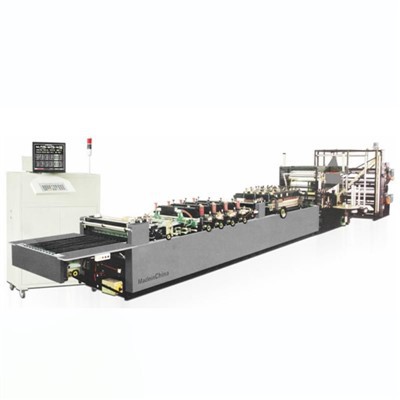
Bag Making Machine If you’re in the process of sourcing mechanical parts and are unsure whether plastic is the right material for your application, I encourage you to reach out to our team. We have extensive experience in manufacturing mechanical parts from a wide range of materials, including metals, plastics, and composites. Our experts can assist you in evaluating the pros and cons of different materials and help you select the most suitable option for your project. Whether you need high – strength components for heavy – duty applications or cost – effective parts for consumer products, we’re here to provide you with top – quality solutions. Let’s have a detailed discussion about your requirements and explore the possibilities together.
References
- Ashby, M. F., & Jones, D. R. H. (2005). Engineering Materials 1: An Introduction toProperties, Applications and Design. Butterworth – Heinemann.
- Callister, W. D., & Rethwisch, D. G. (2014). Materials Science and Engineering: An Introduction. Wiley.
- Strong, A. B. (2008). Plastics: Materials and Processing. Pearson Prentice Hall.
Ruian Huawei Machinery Co., Ltd.
As one of the most professional mechanical parts suppliers in China, we’re featured by quality products and low price. Please rest assured to buy discount mechanical parts made in China here from our factory. Also, quotation is available.
Address: No. 1, Building 2, Jingye Road, Dongshan Street, Rui’an City, Zhejiang Province
E-mail: 13695753569@163.com
WebSite: https://www.hw-machines.com/
