Polyvinyl chloride (PVC) granules are a staple in numerous industries, known for their versatility, durability, and cost – effectiveness. As a PVC granules supplier, I’ve received many inquiries about how these granules perform in high – temperature environments. In this blog, I’ll delve into the characteristics, challenges, and potential applications of PVC granules under high – heat conditions. PVC Granules

General Properties of PVC Granules
PVC is a synthetic plastic polymer that is derived from vinyl chloride monomers. It comes in two main forms: rigid PVC and flexible PVC. Rigid PVC is strong, hard, and has excellent chemical resistance, making it suitable for applications such as pipes, window frames, and siding. Flexible PVC, on the other hand, contains plasticizers that make it soft and pliable, which is often used in products like cables, flooring, and medical devices.
Under normal temperature conditions, PVC granules offer a wide range of benefits. They are resistant to corrosion, weathering, and abrasion. They also have good electrical insulation properties, which is why they are widely used in the electrical and electronics industry. However, when exposed to high temperatures, the performance of PVC granules can change significantly.
Impact of High Temperatures on PVC Granules
Thermal Degradation
One of the most significant issues with PVC granules in high – temperature environments is thermal degradation. When heated above a certain temperature, typically around 100 – 150°C (212 – 302°F), PVC starts to break down. This process involves the dehydrochlorination of PVC, where hydrogen chloride (HCl) gas is released. The loss of HCl leads to the formation of conjugated double bonds in the polymer chain, which causes the PVC to turn yellow, brown, or even black over time.
The thermal degradation of PVC not only affects its appearance but also its mechanical properties. As the polymer chain breaks down, the strength, stiffness, and impact resistance of the PVC product decrease. This can lead to cracking, warping, and brittleness, making the product unsuitable for its intended use.
Plasticizer Migration
In flexible PVC, plasticizers are added to improve flexibility and processability. However, high temperatures can cause plasticizers to migrate out of the PVC matrix. Plasticizer migration occurs because the increased thermal energy allows the plasticizer molecules to move more freely and escape from the polymer network.
The loss of plasticizers has several negative consequences. Firstly, the flexibility of the PVC product is reduced, making it stiffer and less pliable. Secondly, the surface of the PVC may become sticky or greasy as the plasticizers accumulate on the surface. This can attract dust and dirt, which not only affects the appearance of the product but also its cleanliness and hygiene, which is a particular concern in applications such as food packaging and medical devices.
Dimensional Stability
High temperatures can also affect the dimensional stability of PVC granules and products made from them. PVC has a relatively high coefficient of thermal expansion, which means that it expands when heated and contracts when cooled. In high – temperature environments, this expansion can cause PVC products to distort, warp, or even crack.
For example, in the case of PVC pipes used in hot water systems, the thermal expansion can lead to leaks at the joints if the pipes are not properly installed or if they are not designed to accommodate the expansion. Similarly, in PVC window frames, thermal expansion can cause the frames to become misaligned, leading to problems with closing and sealing.
Challenges in High – Temperature Processing
In addition to the performance issues in high – temperature environments, processing PVC granules at high temperatures also poses several challenges for manufacturers.
Processing Difficulty
When PVC granules are heated to high temperatures for processing, they become more viscous and difficult to handle. The increased viscosity requires higher processing temperatures and pressures, which can increase energy consumption and production costs. Moreover, the high processing temperatures can exacerbate the thermal degradation of PVC, leading to a decrease in product quality.
Equipment Wear and Tear
The high – temperature processing of PVC granules can also cause significant wear and tear on processing equipment. The corrosive nature of the HCl gas released during thermal degradation can damage the metal components of extruders, injection molding machines, and other processing equipment. This not only increases the maintenance costs but also reduces the lifespan of the equipment.
Strategies to Improve High – Temperature Performance
Incorporating Heat Stabilizers
Heat stabilizers are additives that can be added to PVC granules to prevent or slow down thermal degradation. There are several types of heat stabilizers available, including organic stabilizers, inorganic stabilizers, and mixed metal stabilizers. These stabilizers work by reacting with the HCl gas released during thermal degradation, thereby preventing the formation of conjugated double bonds in the polymer chain.
By incorporating heat stabilizers, the thermal stability of PVC granules can be significantly improved, allowing them to withstand higher temperatures without significant degradation. This enables the use of PVC in applications where high – temperature resistance is required, such as in automotive under – the – hood components and electrical enclosures.
Using High – Temperature – Resistant Plasticizers
In the case of flexible PVC, using high – temperature – resistant plasticizers can help reduce plasticizer migration at high temperatures. These plasticizers are designed to have a higher boiling point and lower volatility, which means that they are less likely to migrate out of the PVC matrix even when exposed to high temperatures.
High – temperature – resistant plasticizers can maintain the flexibility and other properties of flexible PVC products in high – temperature environments, making them suitable for applications such as automotive cables and industrial hoses.
Reinforcing with Fibers
Another strategy to improve the high – temperature performance of PVC is to reinforce it with fibers. Fibers such as glass fibers, carbon fibers, and aramid fibers can enhance the mechanical properties of PVC, including its strength, stiffness, and dimensional stability at high temperatures.
The addition of fibers can also help reduce the coefficient of thermal expansion of PVC, making the product more resistant to thermal distortion and warping. Reinforced PVC composites are commonly used in aerospace, automotive, and construction applications where high – temperature performance and mechanical strength are critical.
Applications of PVC Granules in High – Temperature Environments
Despite the challenges associated with high – temperature environments, PVC granules can still be used in several applications with the appropriate modifications.
Automotive Industry
In the automotive industry, PVC granules are used in various under – the – hood components, such as wire harnesses, gaskets, and seals. These components are exposed to high temperatures generated by the engine and other automotive systems. By using heat – stabilized and high – temperature – resistant PVC, these components can maintain their performance and integrity in high – temperature environments.
Electrical and Electronics Industry
In the electrical and electronics industry, PVC granules are used in cable insulation and electrical enclosures. These products need to have good electrical insulation properties and be able to withstand high temperatures generated by electrical currents. Heat – stabilized PVC can provide the necessary electrical insulation and thermal stability, ensuring the safe and reliable operation of electrical and electronic equipment.
Construction Industry
In the construction industry, PVC is used in roofing membranes, window frames, and pipes. In some regions, these products may be exposed to high temperatures due to sunlight and hot weather. By using PVC with improved high – temperature performance, such as reinforced PVC or PVC with heat stabilizers, the durability and longevity of these construction products can be enhanced.
Conclusion
As a PVC granules supplier, I understand the importance of providing products that can perform well in various environments, including high – temperature conditions. While PVC granules face challenges such as thermal degradation, plasticizer migration, and dimensional instability in high – temperature environments, there are strategies available to improve their performance.
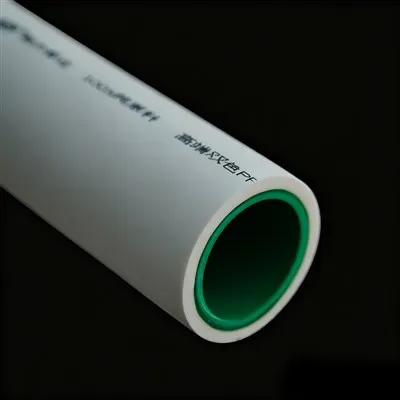
By incorporating heat stabilizers, using high – temperature – resistant plasticizers, and reinforcing with fibers, PVC granules can be made suitable for a wide range of high – temperature applications in industries such as automotive, electrical and electronics, and construction.
PPR Pipe If you are interested in purchasing PVC granules for your high – temperature applications, I encourage you to contact me. I can provide you with detailed information about our product range, including the high – temperature performance characteristics of our PVC granules. We can also work together to develop customized solutions that meet your specific requirements.
References
- "Polyvinyl Chloride (PVC) Handbook" by Charles E. Carraher Jr.
- "Thermal Degradation of Polymers" by A. J. Cornish
- "Plasticizers: Principles and Practice" by George Wypych
Hebei Ruijie Pipe Industry Co., Ltd.
Hebei Ruijie Pipe Industry Co., Ltd. is one of the most experienced PVC granules manufacturers and suppliers in China. With a professional production team, we are able to meet the needs of the majority of our customers. Welcome to wholesale high quality PVC granules in stock here from our factory. Contact us for pricelist and free sample.
Address: Industrial Park, Shaozhuang Township, Suning County, Cangzhou City, Hebei Province
E-mail: 1987870474@qq.com
WebSite: https://www.rjpprpipe.com/
