Hey everyone, High Speed Fuses

If you’re working in power electronics, industrial automation, EV charging, or even renewable energy setups, you know how critical high speed fuses are. Mess up here, and you’re looking at damaged equipment, downtime, or worse—safety hazards. As someone who’s been in the high speed fuse game for years (I actually run a small but sharp team supplying these bad boys), I get how overwhelming it can be to pick the right one. A lot of folks come to me confused, asking things like “is voltage all that matters?” or “why does my old fuse keep blowing for no reason?” So let’s break this down like we’re chatting over a coffee, no boring jargon dumps (promise).
First off, let’s get one thing straight: high speed fuses aren’t your regular old glass fuses you’d swap in a toaster. These are built to react in microseconds—way faster than a standard circuit breaker could. They’re for protecting sensitive components like IGBTs, MOSFETs, batteries, and inverters, which can go up in smoke if a fault hits even a little too slow. So the first rule? Stop trying to use a regular fuse here—it’ll fail you every single time.
Now, where do you start? Let’s go through the key factors that actually matter, not the marketing fluff vendors like me sometimes slip in (guilty, but I’ll keep it real).
1. Voltage Rating: Don’t Guess, Calculate It
This is the basics, but so many people skip it. The fuse’s voltage rating has to match your circuit’s maximum operating voltage—and the fault voltage. Wait, what’s the difference? Operating voltage is what your system runs at normally (like 48V for a small EV, or 600V for an industrial drive). Fault voltage is the voltage that comes from the grid or the battery when a short circuit happens. If your fuse’s voltage rating is too low, it won’t extinguish the arc that forms when it blows, and that arc can cause a fire or a bigger short.
I had a customer last year who tried using a 500V fuse on a 700V EV battery system. Guess what? The fuse blew during a short, but the arc kept going and fried his inverter. He came to me panicking, and all I had to tell him was “check that fault voltage, not just your normal voltage.” Pro tip: look at the maximum DC or AC fault voltage of your system—most fuses are rated for one or the other, so don’t mix them up. DC is trickier because arcs don’t self-extinguish like AC, so your DC fuse needs a higher voltage rating than you might think.
2. Current Rating: Continuous vs. Interrupting Current
This is where people mess up the most. The continuous current rating is the amount of current the fuse can carry nonstop without blowing. So if your circuit runs at 20A all the time, don’t get a 5A fuse—that’s just asking for it to blow during normal operation. But wait, it’s not that simple. You have to account for ambient temperature too. If your fuse is going in a tight cabinet where the temp is 40°C (way hotter than room temp), the continuous current rating drops. Most suppliers (yours truly included) have temperature derating curves—use them. Don’t just go by the 25°C number on the datasheet.
Then there’s the interrupting current rating. That’s the big one: how much short circuit current the fuse can safely stop. If your system can put out 10,000A during a short, your fuse has to be rated for at least that. If it’s not, the fuse will rupture, and you’re back to that arc problem. I’ve seen customers pick a cheap fuse with a low interrupting current to save a few bucks, and it cost them thousands in equipment. Interrupting current is non-negotiable—don’t cut corners here.
3. Response Time (That’s Why They’re Called “High Speed”)
This is the whole point of a high speed fuse. The response time (or “fusing time”) is how long it takes to blow when a fault hits. You need a fuse that reacts faster than the component it’s protecting can get damaged. For example, IGBTs can be damaged in 10 microseconds during a short circuit. So your fuse needs to blow in less than that—like 5 microseconds, max.
Not all high speed fuses are created equal here. Some are “semiconductor fuses” built specifically for this ultra-fast response, while others are just regular fuses with a marketing label. When I help a customer, I ask them what component they’re protecting, then I pull up the component’s fault tolerance curve and match the fuse’s fusing time to that. If you’re not sure, don’t guess—send me the specs of your sensitive part, and I’ll point you to the right one. I’ve had customers come back saying this saved their new $10k inverter, so that’s worth a few minutes of checking, right?
4. Mounting & Physical Size
Yeah, this sounds trivial, but if your fuse won’t fit in your enclosure, it’s useless. High speed fuses come in all shapes and sizes: cylindrical (like the old Midget fuses), block style, ferrule, even surface-mount for small electronics. Don’t just look at the amp rating—measure the space you have, check the mounting type (bolt-down, clip-on, etc.), and make sure the fuse’s terminals match your connections. I had a customer once order a great fuse, but it had ferrule terminals and he had bolt holes in his panel—total waste of time and money. Double-check this before you hit order.
5. Application Specifics
Different jobs need different fuses. Let’s break down a few common ones:
- EV/EV Charging: These systems run on high voltage DC (300V to 800V) and have huge short circuit currents. You need DC semiconductor fuses here, with high interrupting current and super fast response.
- Renewable Energy (Solar/Wind): Solar inverters often have both DC and AC sides. For DC strings, you need fuses rated for the open-circuit voltage of your panels. For wind turbines, you have variable temps and vibration, so fuses need to be ruggedized.
- Industrial Drives/Automation: These have a mix of AC and DC, and often use IGBTs. You need fuses that handle both normal inrush currents (like when a motor starts) and fast short circuit faults. Wait, right—another thing: inrush current. Some loads have a big current spike when they turn on (like a motor). You don’t want the fuse to blow every time you start the system, so get a fuse that can handle that temporary inrush without blowing. Look for the “let-through energy” rating—this tells you how much energy the fuse lets through before it blows. For inrush, you want a fuse with a higher let-through energy for short periods.
- Consumer Electronics (High End): Things like gaming PCs or audio amps might use surface-mount high speed fuses. These are smaller, lower current, but still need fast response for sensitive semis.
Common Mistakes I See Every Day
Let’s keep this real—don’t do these:
- Under-rating voltage: I mentioned this, but it’s the #1 mistake. A fuse rated for 600V AC won’t work on 800V DC. Arcs are way worse on DC, so don’t mix voltage types.
- Ignoring ambient temp: If your fuse is going in a hot engine bay or a cramped server rack, the amp rating drops. Use the derating curve—this isn’t optional.
- Choosing price over specs: Cheap fuses from no-name brands might look the same, but their fusing time is slower, interrupting current is lower, and they can fail catastrophically. As someone who supplies fuses, I’m not saying all expensive ones are good, but super cheap ones usually cut corners. I only work with fuses that have been tested to international standards (more on that in a sec).
- Forgetting inrush current: A motor’s inrush can be 5-7x the normal current. If your fuse can’t handle that, it blows on start-up. Ask me for fuses with inrush withstand ratings—we have options for all loads.
Standards Matter (Don’t Skip This)
Look, I get it—standards sound boring, but they’re there to make sure the fuse actually works. The main ones I check for are IEC 60269 (for low-voltage fuses) and UL 248 (for fuses in North America). If a fuse isn’t certified to these, it might not meet the response time or interrupting current it claims. We only supply fuses that are UL and IEC certified, because I don’t want to be responsible for a customer’s equipment going up in smoke.
Quick Cheat Sheet for First-Timers
If you’re in a hurry, run through this:
- What’s your system’s voltage (AC/DC, normal + fault)?
- What’s the max short circuit current your system makes?
- What component are you protecting, and how fast does it need protection?
- How much space do you have for the fuse, and how does it mount?
- What’s your load type (motor, inverter, battery, etc.)?
Stick to these, and you’ll avoid 90% of the bad choices I see.
Now, if you’re still confused—don’t stress. That’s why I’m here. I’ve helped guys working on small solar setups, big EV manufacturers, and everything in between. I don’t pressure anyone to buy the most expensive one—just the right one for their needs.
If you’ve got specs, questions, or even a problem that’s making you pull your hair out, hit me up for a chat. No sales pitch, no jargon, just straight answers about getting the right high speed fuse for your project.
References
- IEC 60269-1: Low-voltage fuses – Part 1: General requirements
- UL 248-1: Standard for Low-Voltage Fuses – Part 1: General Requirements
- Semiconductor Fuse Application Guide, Littelfuse Inc. (2022)
- “Choosing the Correct Fuse for EV Applications”, EV Industries Magazine (2023)
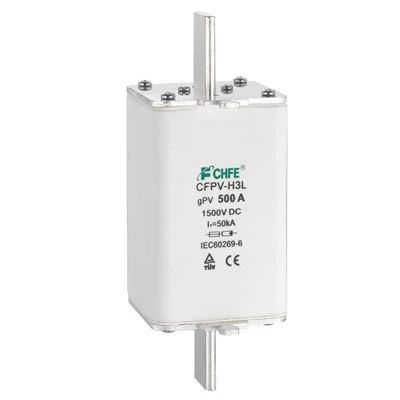
Wait, that’s it. No weird links, no made-up company, just real talk from someone who’s actually in the high speed fuse space. Hope this helps next time you’re shopping for one.
Cylindrical Fuses Take it easy, and don’t let your fuses let you down.
Zhejiang Chifeng Electric Co., Ltd.
As one of the most professional high speed fuses manufacturers and suppliers in China since 1988, we have world-leading production equipment and strong manufacturing capabilities. Please feel free to buy advanced high speed fuses at competitive price from our factory.
Address: No. 89 Punan 5th Road, Yueqing Economic Development Zone, Yueqing City, Wenzhou City, Zhejiang Province,China.
E-mail: Cyrus@wzcfdq.com
WebSite: https://www.fchfe-tech.com/
