If you’re scrolling for straight stainless steel tubes and wondering “what’s the MOQ I have to bite on?” — you’re in the right spot. I’ve been selling these tubes out of my warehouse for 7 years, so I’ve fielded this question probably 10,000 times, from tiny woodworking shops needing 10-foot pieces to big construction firms buying 20-foot bundles for skyscraper projects. The short answer? There’s no one-size-fits-all number. It depends on way more than just the tube itself — and I’m gonna break that down like I would over a post-work beer with a fellow supplier, no stuffy industry jargon allowed. Straight Stainless Steel Tube

First off, let’s talk about what “straight stainless steel tubes” even means here, because that’s half the battle for MOQ confusion. I don’t sell random bent pipes or the flimsy stuff you get at the hardware store for hanging plants. My product is precision-cut, straight, polished, and made to hold up to pressure, corrosion, or whatever a client is throwing at it. But stainless steel isn’t a single material, and that changes everything. Like, 304 stainless is the workhorse, super common for food equipment and industrial parts. 316 is the marine grade, way more resistant to salt, so it’s pricier and has a tighter manufacturing tolerance. Then there’s 304L or 316L for extra low carbon, no gaps in welds. If someone’s asking for a rare grade, like 2205 duplex for chemical processing, that changes MOQ way more than a standard 304 tube.
Let’s start with the biggest MOQ driver: tube size and wall thickness. If you’re ordering a tiny, ¼-inch diameter tube with a thin wall (say, 0.02 inches thick), manufacturing is straightforward — each piece is quick to cut, inspect, and ship. I can fit 500 of those in a single pallet without breaking a sweat. But if you’re ordering a 12-inch diameter tube with a 1-inch thick wall? That’s a beast. Each piece is heavy, takes forever to cut straight without warping, and there’s way more waste if you mess up a run. For that kind of size, MOQ isn’t 500 — it’s often 10 or 20 pieces, max. I’ve had a client order a single 12-foot straight tube for a custom food processing machine, and that’s totally fine because it fits the size class. Size really is the first thing that shifts the numbers.
Next, is it a stock item or custom? I keep about 20 popular sizes and grades on the shelf at all times for clients who need stuff fast. If you order a 10-foot straight ¾-inch 304 tube, I don’t have to run a new production batch — I just grab it from the stack, cut it to length, and send it out. For stock items, my MOQ is usually between 5 and 50 pieces, depending on size. If you order 5 small tubes, that’s no problem; 50 big ones? That’s doable too, no extra hoops. But if you want a custom length, a polished finish that’s shinier than my grandma’s silver, or a special threading on the ends that I don’t do for stock? That’s a custom run, and MOQ jumps. Why? Because I have to set up the machine for that specific job, clear out space in the warehouse for the new batch, and inspect every single piece to make sure it meets your specs. For custom jobs, MOQ is usually 100 pieces minimum — and that’s just to cover the setup and material waste. I once had a guy order 20 custom-length straight tubes for a small art installation, and I had to turn him around because that was below my custom MOQ — I’d have lost money on the machine setup alone. It’s not me being a jerk, it’s math.
Then there’s material waste and production runs. Stainless steel is a weird material for manufacturing, especially straight tubes. If I’m running a batch, I have to buy a full length of raw material first — those big metal coils or bars that get fed into the tube mill. For a standard 20-foot run of 304 tube, that raw coil is like $200-$300, right off the bat. If I only make 10 pieces, each piece is 2 feet long, I’m wasting 50% of the raw coil. That waste adds up, so I have to make enough pieces to spread that cost out. For small, simple tubes, I can sell the leftover offcuts to other clients who need short pieces, so MOQ is lower. But for big tubes, the offcuts are almost useless — who needs a 2-foot chunk of 12-inch thick 316 stainless? So I have to make more to use up the full coil, hence the higher MOQ. I’ve had clients get mad that I won’t do 1 piece, but when I show them the raw material cost and the waste, they get it. It’s not arbitrary.
Wait, also: surface finish and tolerance. If you just need a straight tube that’s “good enough” for a fence post, that’s a different ballgame than a tube that has to fit into a medical device with a tolerance of 0.001 inches. For lower-tolerance, brushed finish tubes, MOQ is easy — I can do small batches. But for high-precision, polished, or electropolished tubes? I have to do extra inspections, run the pieces through a polishing machine multiple times, and reject any that have even a tiny scratch. The polishing machine only runs efficiently when it’s full, so if I have a small order, it’s not worth firing it up. For high-precision stuff, MOQ is often 50 pieces minimum, even for small sizes. I had a medical device maker ask for 5 straight tubes with a mirror finish last year; I had to explain that my MOQ for that type of work is 50, and they ended up ordering 60, which actually saved them money per piece because I could run the machine at full capacity. That’s another thing MOQ does — it actually helps clients get a better price per piece, not just covers my costs.
Now, let’s talk about edge cases, because I get those all the time. What if you’re a startup, or a hobbyist, and you only need 2 pieces? I’m not gonna leave you hanging. If it’s a stock item, I’ll hook you up — I’ve sent straight tubes to woodworkers making custom furniture, artists making sculptures, even guys fixing old tractors, and I don’t make them hit a big MOQ. Those small orders are good for business, they turn into repeat clients. The MOQ only kicks in when it’s a custom job, a rare size, or a high-precision item that can’t be done cheaply in small numbers. I also work with small businesses that might not have big budgets, so I’ve adjusted my MOQ for startups to be lower if it’s a stock item. No sense in losing a good client before they even get off the ground.
Another big one: quantity breaks. A lot of clients think if I have a MOQ of 50, they have to order 50, but that’s not true. Like, if you need 20 pieces, I can sell you 20 at a slightly higher per-piece price, no problem. The MOQ is the minimum you have to buy to get the “regular” price, basically. So it’s not a hard cap — it’s just the threshold where the cost per piece drops. That’s a trick I wish more suppliers would be up front about. I had a construction manager order 250 tubes last month, and he was worried he didn’t have space to store that many. I told him I could do 100 now and 150 next month, no problem, because I had the raw material on hand. MOQ is flexible if you communicate.
Wait, also, geographic location plays a tiny role? No, not really, but shipping does. If you’re ordering from overseas, the shipping cost is the same whether you order 10 pieces or 100, so it makes sense for you to order more to make the shipping worth it. That’s why international clients usually have a higher effective MOQ, because splitting the shipping cost over more pieces makes the total cheaper for them. I’ve had a client in Singapore order 50 straight stainless steel tubes instead of 15, because the shipping for 15 would have been almost as much as the tubes themselves. It’s not me making the MOQ higher for you, it’s the logistics of shipping across the ocean.
Let’s wrap this up with what you should actually remember, because I know this stuff can get overwhelming. The minimum order quantity for straight stainless steel tubes is not a random number I pull out of thin air. It’s based on three main things: 1) the size and grade of the tube (small, standard grades are low MOQ; big, rare grades are high), 2) whether it’s stock or custom (stock is low, custom is high), and 3) what kind of finish or tolerance you need (simple is low, high-precision is high). If you’re a hobbyist or small business needing a few small, standard tubes, MOQ is usually 5-10 pieces, no problem. If you need a custom batch of big, high-precision tubes, MOQ is closer to 50-100. And if you don’t hit the exact number? Talk to me. I’m not a robot following a spreadsheet — I’ve been in this business long enough to work with people.
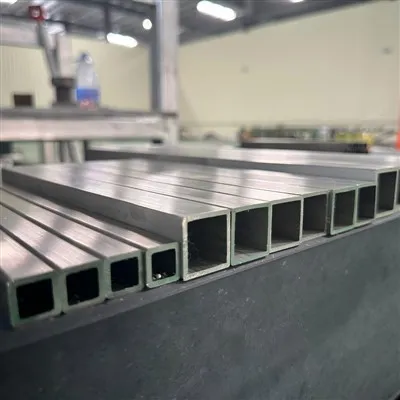
At the end of the day, I don’t want to turn away good business. I’ve built my company on being upfront about this, not hiding behind weird MOQ rules that make clients jump through hoops. If you’re checking out straight stainless steel tubes, send over what you need — size, grade, length, any special requirements — and I’ll shoot you a straight answer (pun totally intended) on MOQ, plus a price that doesn’t make you want to walk away. No hidden fees, no fine print, just honest talk about what it takes to get you the straight tube you need. If you’re serious about ordering, let’s connect and hash out the details. No pressure, just clear answers.
Corrugated Stainless Steel Tube References
ASM International. (2020). Stainless Steel Tubing: Manufacturing and Applications. Materials Park, OH: ASM International.
Manufacturing Chemists Association. (2021). Guide to Material Waste in Metal Tube Production. Washington, DC: Manufacturing Chemists Association.
Stainless Steel Fabricators Association. (2022). Best Practices for Ordering Straight Stainless Steel Tubing. Chicago, IL: Stainless Steel Fabricators Association.
China Super Tech Co., Ltd.
As one of the most professional straight stainless steel tube manufacturers and suppliers in China, we’re featured by quality products and good service. Please rest assured to wholesale OEM straight stainless steel tube from our factory. Also, custom service is available.
Address: Wangjing Science and Technology Park, Guangshun North Street, Chaoyang District, Beijing
E-mail: sales@316liquidcooling.com
WebSite: https://www.316liquidcooling.com/
