Hey everyone, it’s Jake from [Your Company Name], and I get so many questions that start with, “Wait, can I actually use a pneumatic actuator for food stuff?” Let’s cut to the chase here—this isn’t some abstract lab question. I’ve been supplying pneumatic actuators to food and beverage plants for 8 years now, and I’m here to tell you: yes, they absolutely can work in food-grade applications. But there’s a whole lot of nuance to it that most people don’t talk about, and if you skip that part, you’re gonna end up with headaches, maybe even regulatory issues. Let’s break this down like I would with a plant manager on a Monday morning—no fancy jargon, just real talk. Pneumatic Actuator
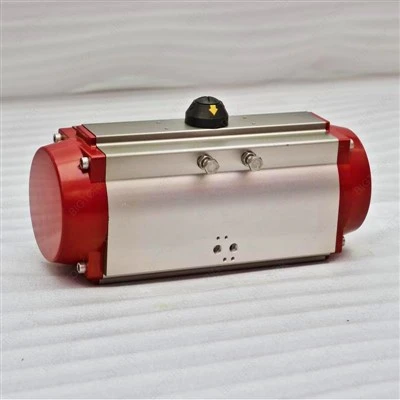
First, let’s get one thing straight: “food-grade” isn’t just a buzzword. It’s a set of rules, mostly from the FDA in the US, EHEDG in Europe, and a handful of other global bodies, that say any part touching food can’t leach chemicals, can’t harbor bacteria, and is easy to clean. For pneumatic actuators, that means every single component—from the piston to the O-rings to the body of the unit—has to check those boxes. A lot of people I talk to assume “pneumatic = bad for food” because they’ve seen old, rusted actuators in a dusty warehouse or a used equipment yard. Those are the ones that were never designed for food work, not the ones we build here.
Let’s start with the components that matter most. The body of the actuator: most standard ones are made of cast iron or aluminum, which would leave metal shavings or corrode if they touch food or cleaning chemicals. We swap that out for 304 or 316 stainless steel, guys. 316 is even better because it’s more corrosion-resistant for plants that use harsh sanitizers like chlorine or quaternary ammonium compounds. The internals: pistons are usually plastic, but we use food-grade PTFE or Delrin instead of regular plastic that might off-gas when heated. The seals? Oh man, seals make or break this. Regular rubber O-rings would leach tiny amounts of petroleum-based gunk into food over time—nope, that’s a hard no. We use EPDM, silicone, or Viton seals that are explicitly listed as compliant with FDA 21 CFR 177.2600 or EU 10/2011. I don’t mess around with seals that don’t have that paperwork, because if a plant gets inspected, the last thing I want is to be the reason they get a warning letter.
Next, let’s talk about why pneumatic actuators are actually a good fit for food applications, not just a possible one. Food plants run 24/7 for the most part—you don’t want downtime. Pneumatic actuators are super reliable; they don’t have electric parts that can short out or overheat, which is a big deal in humid environments (think of a brewery or a meat processing plant where the air is thick with moisture). They’re also easy to clean—no nooks and crannies where food particles can get stuck. We design our food-grade actuators with smooth surfaces, no hidden bolts that are hard to reach, and they meet EHEDG standards for cleanability, which means plants can do CIP (clean-in-place) or SIP (sanitize-in-place) cycles without taking the actuator apart. That saves them hours of labor every week.
But here’s the catch: not all pneumatic setups are created equal. I’ve had a customer come to me a year ago who bought cheap pneumatic actuators from a random supplier, and when they ran their CIP cycle at 180°F, the seals started melting and leaking. Turned out the supplier used regular EPDM instead of heat-resistant food-grade silicone. Another customer had an issue with a piston that left tiny plastic fragments in a batch of granola—their actuator had a standard Delrin piston, not the food-grade version with reinforced PTFE. So if you’re gonna use pneumatic actuators for food, you can’t just grab the cheapest model off the shelf. You have to specify food-grade ratings, and you have to verify the supplier is actually following through, not just slapping a sticker on a regular actuator.
Let’s talk about specific use cases, because that’s what matters. I’ve got actuators installed on everything from valves in a soft drink bottling line (they control the flow of syrup and carbonated water) to door mechanisms in a frozen pizza plant (they open and close ovens without letting heat escape) to mixer controls in a protein bar factory. One of my longest-running clients is a craft brewery here in Ohio—they’ve been using our actuators for their fermentation tanks for 5 years now, no issues. Their brewmaster told me they switched from electric actuators because the electric ones would get covered in yeast and stuck, leading to downtime. The pneumatic ones are so easy to hose down between batches, they haven’t had a production halt because of actuator issues since we installed them.
Another big thing: air supply. Pneumatic actuators run on compressed air, and if that air isn’t clean, you can get contaminants in your food. That’s not the actuator’s fault, but it’s part of the whole system. We always tell our food-grade customers to add a proper air filter and dryer to their setup. The filter removes water, oil, and dirt from the compressed air, and the dryer keeps humidity low—no chance of moisture getting into the actuator and growing bacteria. I’ve seen plants skip this step, and they end up with rust in the air line that gets into the actuator, which then gets into the product. It’s a small extra cost upfront, but it saves you from a whole lot of mess later.
Regulatory stuff is non-negotiable here. If you’re making food for sale, you’re gonna get inspected, and the inspectors will check every piece of equipment that touches or comes into contact with food. So you need documentation, not just a sales pitch. Our food-grade actuators come with COAs (certificates of analysis) for every component, proving the seals and materials meet FDA, EHEDG, and EU standards. We also make sure all our labeling is clear—no vague “suitable for food” language, just exact compliance numbers. I once had a plant safety manager tell me that an inspector failed their old actuators because the supplier couldn’t provide a COA for the O-rings. That’s the kind of mistake you don’t want to make.
Now, let’s address the elephant in the room: what are the downsides? Pneumatic actuators do need a compressed air system, which is an extra upfront cost compared to some electric models. But over time, they’re cheaper to maintain—fewer moving parts, less wear and tear. They also don’t generate heat like electric ones, which is a plus in a plant where temperatures are already high. And if you have a power outage? Electric actuators stop working, but pneumatic ones can be fitted with a fail-safe spring so they close or open automatically when power is out, which is super important for things like chemical injection valves in processing plants.
I also get asked a lot about washdown environments. Plants that process meat, poultry, or produce hose down their equipment multiple times a day, using high-pressure water and harsh chemicals. Our food-grade actuators are rated for IP69K, which means they can handle high-pressure, high-temperature washdowns without getting damaged or letting water in. Standard actuators would rust or short out after a few weeks in that kind of environment. I had a customer in a pork processing plant switch over from electric actuators that were dying every 6 months to our IP69K-rated ones 2 years ago—they haven’t had to replace a single one since. That’s a huge cost savings right there.
Wait, let’s talk about something most people don’t think about: noise. Food plants are loud places, right? Pneumatic actuators can be noisy if they’re not muffled. But we supply our food-grade units with noise-dampening features that meet OSHA standards for workplace noise levels. That’s another small detail that makes a big difference for employees who are working around that equipment all day.
So putting it all together: yes, pneumatic actuators are totally usable in food-grade applications, but only if you pick the right ones, from a supplier who knows the food industry, and set up the system correctly. It’s not a “one-size-fits-all” thing, but there are plenty of options that meet all the regulatory requirements and stand up to the rigors of food processing.
If you’re running a food or beverage plant and you’re tired of actuator issues, or you’re looking to upgrade your equipment and want to know if pneumatic is the right call, hit me up. I can send over the COAs for our food-grade actuators, walk you through specific use cases for your line, or even set up a time to come out and look at your setup. I don’t do pushy sales—just real advice from someone who’s been in this industry long enough to know what works, and what doesn’t.

At the end of the day, the last thing you want in food production is downtime, contamination, or a regulatory headache. Pneumatic actuators are a proven solution for that, but you have to do it right. Don’t cut corners on materials, don’t skip the air filtration, and don’t buy from a supplier who doesn’t understand food-grade requirements. Trust me, I’ve seen the mistakes, and I can help you avoid them.
Scotch Yoke Actuator References
U.S. Food and Drug Administration. (2023). 21 CFR Part 177: Indirect food additives: polymers.
European Hygienic Engineering and Design Group. (2021). EHEDG Guidelines for Hygienic Design of Equipment for the Food and Pharmaceutical Industries.
International Organization for Standardization. (2019). ISO 10326: Pneumatic fluid power – Mounting of pneumatic actuators.
Zhejiang Bigtork Valve Automation Co., Ltd.
Zhejiang Bigtork Valve Automation Co., Ltd. is one of the leading pneumatic actuator manufacturers and suppliers in China. We warmly welcome you to buy customized pneumatic actuator at competitive price from our factory. Contact us for more details.
Address: 98 Yuanqu Avenue,Anfeng Industrial Zone,Oubei,Yongjia,Zhejiang,China.
E-mail: sales@bigtork.com
WebSite: https://www.bigtork.com/
