Hey there! I’m an operator at a metal cutting and forming supplier. Over the years, I’ve seen firsthand what it takes to be good at this job. In this blog, I’m gonna share with you the key skills an operator needs in metal cutting and forming. Metal Cutting and Forming
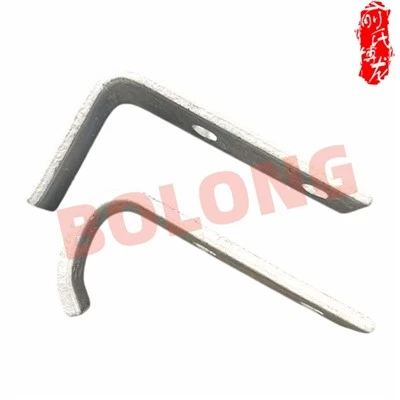
1. Technical Knowledge
First off, you gotta have a solid understanding of metals. Different metals have different properties, like hardness, ductility, and thermal conductivity. For example, steel is strong and hard, but it can be tough to cut compared to aluminum, which is softer and more malleable. Knowing these properties helps you choose the right cutting tools and forming methods.
You also need to know about cutting tools. There are all kinds of them, like saws, drills, and milling cutters. Each tool has its own purpose and works best under certain conditions. For instance, a high – speed steel drill bit is great for general drilling in mild steel, but if you’re working with hardened steel, you might need a carbide drill bit. Understanding how to select the right tool, how to sharpen it, and how to use it safely is crucial.
In addition, knowledge of forming processes is essential. There are processes like bending, rolling, and stamping. Bending, for example, requires you to know the correct angle, the radius, and the force needed to bend the metal without cracking it. Rolling is used to create cylindrical or conical shapes, and you need to understand how to control the rollers to get the right dimensions.
2. Precision and Accuracy
Precision is everything in metal cutting and forming. Even a small error can lead to a part that doesn’t fit or work as intended. When cutting, you need to be able to measure accurately. We use tools like calipers, micrometers, and rulers to measure the thickness, length, and width of the metal. These measurements are used to set up the cutting equipment, ensuring that the cuts are made exactly where they need to be.
For forming, accuracy in shaping the metal is just as important. If you’re bending a metal sheet to make a box, you need to make sure the angles are exactly 90 degrees, and the sides are the right length. Any deviation can cause problems when assembling the parts. To achieve this level of precision, operators often use jigs and fixtures. These are devices that hold the metal in place during cutting or forming, ensuring consistent results.
3. Machine Operation Skills
As an operator, you’ll be working with all sorts of machines. You need to know how to operate them safely and efficiently. This includes understanding the control panels, setting the right speeds and feeds, and knowing how to troubleshoot common problems.
Let’s talk about CNC (Computer Numerical Control) machines. These are really popular in our industry because they offer high precision and repeatability. But operating a CNC machine requires a different set of skills. You need to be able to read and understand G – code, which is the language used to program the machine. You also need to know how to load the programs, set up the workpieces, and monitor the machining process.
For manual machines, like a lathe or a press brake, you need to have good hand – eye coordination. You’ll be using your hands to control the movement of the machine and the metal. You also need to know how to adjust the machine settings based on the type of metal and the cutting or forming operation you’re doing.
4. Problem – Solving Skills
Things don’t always go smoothly in metal cutting and forming. You might encounter issues like tool breakage, poor surface finish, or dimensional inaccuracies. That’s where your problem – solving skills come in.
When a tool breaks, you need to figure out why it happened. Was it because the tool was worn out? Or was it because the cutting parameters were set too high? Once you identify the problem, you can take steps to fix it, like replacing the tool or adjusting the settings.
If you notice a poor surface finish on the cut or formed metal, you need to analyze the situation. It could be due to a dull tool, improper coolant usage, or incorrect feed rate. By troubleshooting the problem, you can find the root cause and make the necessary adjustments to improve the quality of the work.
5. Safety Skills
Safety is a top priority in our industry. Metal cutting and forming involve sharp tools, high – speed machinery, and sometimes hazardous materials. You need to know how to protect yourself and others.
This includes wearing the right personal protective equipment (PPE), like safety glasses, gloves, and ear protection. You also need to follow safety procedures when operating the machines. For example, you should never reach into a moving machine, and you should always make sure the machine is properly guarded.
In addition, you need to be aware of the potential hazards associated with different metals. Some metals, like lead and cadmium, can be toxic if inhaled or ingested. You need to know how to handle these metals safely and dispose of them properly.
6. Quality Control Skills
Quality control is an important part of metal cutting and forming. You need to be able to inspect the finished parts to make sure they meet the required specifications. This involves using inspection tools like gauges, coordinate measuring machines (CMMs), and visual inspection.
When using a gauge, you’re checking if the dimensions of the part are within the acceptable tolerance range. A CMM is a more advanced tool that can measure the part’s dimensions with high accuracy. Visual inspection is also important, as it allows you to check for surface defects, like cracks or scratches.
If a part doesn’t meet the quality standards, you need to decide whether it can be re – worked or if it needs to be scrapped. This requires good judgment and an understanding of the cost – benefit analysis.
7. Adaptability and Continuous Learning
The metal cutting and forming industry is constantly evolving. New technologies, materials, and processes are being developed all the time. As an operator, you need to be adaptable and willing to learn new things.
For example, new cutting tools with better performance are being introduced regularly. You need to be open to trying these new tools and learning how to use them effectively. Similarly, new forming techniques are emerging, and you need to keep up with these developments to stay competitive.
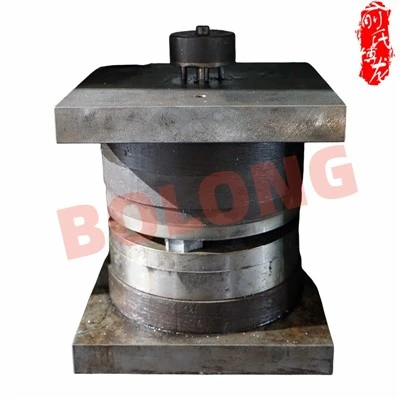
In addition, the requirements of our customers can change. They might ask for parts with different shapes, sizes, or materials. You need to be able to adapt your skills and processes to meet these new demands.
Conclusion
EV Battery Terminals So, there you have it! These are the main skills an operator needs in metal cutting and forming. It’s a challenging but rewarding job. If you’re in the market for high – quality metal cutting and forming services, we’d love to talk to you. Whether you need simple cuts or complex formed parts, our team of skilled operators is ready to take on your project. Reach out to us for a quote and let’s discuss how we can meet your needs.
References
- "Modern Metalworking Technology" by Robert L. Todd
- "Machining and Machine Tools" by G. Boothroyd
- Industry – specific training manuals and guides
Ningbo Fenghua Bolong Machinery Manufacturing Co., Ltd.
Ningbo Fenghua Bolong Machinery Manufacturing Co., Ltd. is one of the most professional metal cutting and forming manufacturers and suppliers in China, also supports high quality customized service. With abundant experience, we warmly welcome you to buy durable metal cutting and forming made in China here from our factory.
Address: No. 27 Hehai Road, Binhai New Area, Fenghua Economic Development Zone, Ningbo City, Zhejiang Province
E-mail: seven@nbbolongmachinery.com
WebSite: https://www.nbbolongmachinery.com/
