Hey there! As a supplier of SMD inductors, I often get asked about the common magnetic core materials used in these components. So, I thought I’d put together this blog post to share some insights on the topic. SMD Inductor
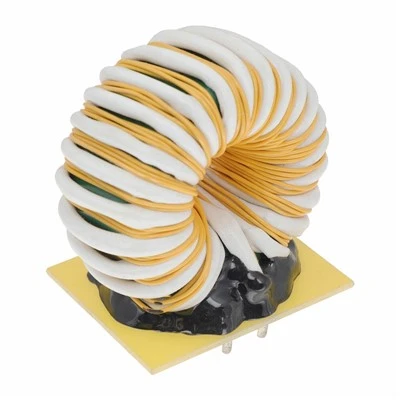
Let’s start with what SMD inductors are. SMD stands for Surface Mount Device, and these inductors are designed to be mounted directly onto the surface of a printed circuit board (PCB). They’re used in a wide range of electronic devices, from smartphones and tablets to laptops and TVs, to store and release electrical energy in the form of a magnetic field.
Now, let’s dive into the common magnetic core materials for SMD inductors.
Ferrite
Ferrite is one of the most widely used magnetic core materials for SMD inductors. It’s a type of ceramic compound made up of iron oxide and other metal oxides, such as nickel, zinc, or manganese. Ferrite cores have several advantages, which make them a popular choice in the electronics industry.
First of all, ferrite has high magnetic permeability. This means it can easily store and transfer magnetic energy, resulting in a high inductance value for the inductor. High inductance is crucial in many applications, like filtering and energy storage.
Secondly, ferrite cores have low electrical conductivity. This property helps to reduce eddy current losses, which are a major cause of energy dissipation in inductors. By minimizing these losses, ferrite-core inductors can operate more efficiently, especially at high frequencies.
Ferrite cores also come in various shapes and sizes, which makes them versatile for different SMD inductor designs. They can be made into toroidal, E-core, or U-core shapes, depending on the specific requirements of the application.
However, ferrite cores also have a few limitations. One of the main drawbacks is their relatively low saturation flux density. This means that if the current flowing through the inductor is too high, the ferrite core can become saturated, causing the inductance value to drop significantly.
Iron Powder
Iron powder cores are another common choice for SMD inductors. As the name suggests, these cores are made from compressed iron powder particles, which are typically coated with an insulating material to reduce eddy current losses.
One of the key advantages of iron powder cores is their high saturation flux density. Compared to ferrite cores, iron powder cores can handle much higher currents without saturating. This makes them ideal for applications that require high-power handling, such as power supplies and voltage regulators.
Iron powder cores also have a relatively stable inductance value over a wide range of frequencies. This property is known as frequency stability, and it’s important in applications where the inductor needs to maintain a consistent performance across different frequencies.
In addition, iron powder cores are relatively inexpensive to manufacture. This makes them a cost-effective option for high-volume production of SMD inductors.
On the downside, iron powder cores have higher core losses compared to ferrite cores. This is because the iron powder particles have a certain amount of electrical conductivity, which can lead to eddy current losses. As a result, iron powder core inductors may not be as efficient as ferrite core inductors, especially at high frequencies.
Molybdenum Permalloy Powder (MPP)
Molybdenum Permalloy Powder (MPP) cores are a type of powder core that is made from a combination of nickel, iron, and molybdenum. These cores offer a unique set of properties that make them suitable for high-performance SMD inductors.
One of the main advantages of MPP cores is their extremely high magnetic permeability and low core losses. This combination allows MPP core inductors to operate with high efficiency, even at high frequencies and high currents. They also have excellent DC bias characteristics, which means that the inductance value remains relatively stable even when a DC current is applied.
MPP cores also have a high saturation flux density, although not as high as iron powder cores. This makes them suitable for applications that require a balance between high inductance, low losses, and high current handling capabilities, such as in high-end power supplies and RF circuits.
However, the main drawback of MPP cores is their relatively high cost. The materials used in MPP cores are expensive, and the manufacturing process is more complex. As a result, MPP core inductors are typically more expensive than ferrite or iron powder core inductors, which limits their use to applications where cost is not the primary concern.
Sendust
Sendust cores are made from an alloy of iron, silicon, and aluminum. They offer a good combination of properties that make them suitable for a variety of SMD inductor applications.
One of the advantages of Sendust cores is their high saturation flux density and relatively low core losses. This makes them a good choice for applications that require both high current handling capabilities and high efficiency, such as in power converters and motor drives.
Sendust cores also have a relatively stable inductance value over a wide range of temperatures. This property, known as temperature stability, is important in applications where the inductor needs to operate reliably in different environmental conditions.
In addition, Sendust cores are less expensive than MPP cores, making them a more cost-effective option for many applications.
However, similar to iron powder cores, Sendust cores have higher core losses compared to ferrite cores at high frequencies. This can limit their use in applications that require very high efficiency at high frequencies.
Choosing the Right Magnetic Core Material
When it comes to choosing the right magnetic core material for an SMD inductor, there are several factors to consider.
First, you need to consider the application requirements. If the application requires high inductance and low losses at high frequencies, ferrite cores may be the best choice. If high current handling capabilities are the main priority, iron powder, MPP, or Sendust cores may be more suitable.
Second, you need to consider the cost. If cost is a major concern, ferrite or iron powder cores may be the most practical option. However, if performance is the top priority and cost is less of an issue, MPP cores may be worth the investment.
Finally, you also need to consider the size and shape requirements of the inductor. Different magnetic core materials can be fabricated into different shapes and sizes, so you need to choose a material that can meet the specific design requirements of your application.
As a supplier of SMD inductors, we have a wide range of options available to meet your specific needs. Whether you need ferrite core inductors for high-frequency applications, iron powder core inductors for high-power applications, or MPP or Sendust core inductors for high-performance applications, we’ve got you covered.
If you’re interested in learning more about our SMD inductors or would like to discuss your specific requirements, feel free to reach out to us. We’re always happy to help you find the right solution for your project.
Current Transformer References
- "Magnetic Materials for Power Electronics" by Georgios Konstantinou and Radu Teodorescu
- "Handbook of Magnetic Materials" edited by Klaus H.J. Buschow
- Various technical datasheets from magnetic core and SMD inductor manufacturers
Dongguan Hensiron Electric Co., Ltd.
As one of the most professional smd inductor suppliers in China, we have world-leading production equipment and strong manufacturing capabilities. Please feel free to buy high quality smd inductor made in China here from our factory. Customized orders are welcome.
Address: Building 4, Xinxing Industrial Zone, Wangao Road, Wanjiang Street, Dongguan City, China
E-mail: jessica@dghensiron.com
WebSite: https://www.dghensiron.com/
