Yo! I’m a supplier in the SWIR (Short-Wave Infrared) imaging game. And one question I get asked a lot is, "What are the data storage requirements for SWIR imaging?" Well, let’s dive right into it and break it down. SWIR Imaging
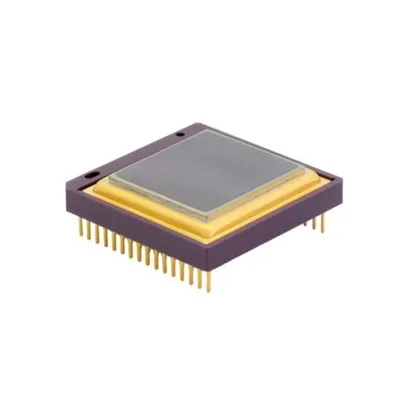
First off, let’s understand what SWIR imaging is all about. SWIR is that part of the electromagnetic spectrum between the visible and mid-wave infrared. It’s super useful in a bunch of fields like agriculture, security, and even in the semiconductor industry. SWIR cameras can detect things that our eyes can’t, like differences in moisture content in plants or defects in electronic components.
Now, when it comes to data storage for SWIR imaging, there are a few factors we gotta consider. The first one is the resolution of the SWIR camera. Just like with regular cameras, the higher the resolution, the more data it’s gonna generate. A high – res SWIR camera can produce images with a ton of pixels, and each pixel holds information about the intensity of the SWIR light it detected.
Let’s say you’ve got a SWIR camera with a resolution of 1024×1024 pixels. That’s over a million pixels right there! And if each pixel is represented by, say, 16 bits of data (which is common in SWIR imaging to capture a wide range of light intensities), then each image is gonna take up a fair amount of space. To calculate the size of a single image, we multiply the number of pixels by the number of bits per pixel. So, for our 1024×1024 pixel camera with 16 – bit pixels, that’s 1024 * 1024 * 16 bits. Convert that to bytes (divide by 8), and we get 2,097,152 bytes or about 2 megabytes per image.
But it’s not just about still images. A lot of SWIR imaging applications involve capturing video. And if you’re recording video, the data storage requirements go up real fast. The frame rate is a big factor here. Frame rate is how many frames (or images) the camera captures per second. A common frame rate for SWIR video is 30 frames per second. So, if each frame is 2 megabytes, then in just one second of video, you’re generating 2MB * 30 = 60 megabytes of data. In a minute, that’s 60MB * 60 = 3600 megabytes or 3.6 gigabytes. And if you’re recording for an hour, well, you’re looking at over 200 gigabytes of data!
Another important factor is the bit depth. As I mentioned earlier, most SWIR cameras use 16 – bit pixels. But some high – end cameras can go even higher, like 24 – bit or 32 – bit. The higher the bit depth, the more accurately the camera can represent the intensity of the SWIR light. But it also means more data per pixel. For example, if we increase our bit depth from 16 to 24 bits for our 1024×1024 pixel camera, each image will now be 1024 * 1024 * 24 / 8 = 3,145,728 bytes or about 3 megabytes. That’s a 50% increase in data size per image!
The compression method you use also plays a huge role in data storage. There are different types of compression algorithms out there. Lossless compression reduces the data size without losing any information. This is great if you need to preserve every single bit of data for things like scientific research. But lossless compression doesn’t always reduce the data size by a whole lot.
On the other hand, lossy compression can reduce the data size significantly. It does this by getting rid of some of the information that’s considered less important. For SWIR imaging, lossy compression can be a good option if you’re okay with a little bit of loss in image quality. For example, in some security applications, a slight loss in image quality might not matter as long as you can still identify the objects in the image.
Now, let’s talk about the different types of storage solutions available for SWIR imaging data. One of the most common is hard disk drives (HDDs). HDDs are relatively cheap and can offer a large amount of storage space. You can get HDDs with capacities of several terabytes. But they have some drawbacks. They’re relatively slow compared to other storage options, and they’re also more prone to mechanical failures.
Solid – state drives (SSDs) are another option. SSDs are much faster than HDDs, which means you can read and write data to them more quickly. This is really important if you need to process the SWIR imaging data in real – time. However, SSDs are more expensive per gigabyte than HDDs, so if you need a huge amount of storage, they can get pricey.
For long – term storage and archiving, tape drives can be a good choice. Tape drives are very cheap per gigabyte and can store a massive amount of data. But they’re slow to access, so they’re not really suitable for applications where you need to access the data quickly.
Cloud storage is also becoming more and more popular. With cloud storage, you don’t have to worry about buying and maintaining your own storage hardware. You just pay a monthly or annual fee based on how much storage you use. Cloud storage providers also usually offer features like data backup and recovery, which can be really useful. But there are some concerns about data security and privacy when using cloud storage.
So, as you can see, the data storage requirements for SWIR imaging can vary widely depending on factors like resolution, frame rate, bit depth, compression, and the type of storage solution you choose.
If you’re in the market for SWIR imaging equipment and are worried about data storage, don’t sweat it. We’ve been in this business for a while, and we can help you figure out the best setup for your specific needs. Whether you’re a small research lab or a big – time industrial operation, we’ve got the expertise to guide you through the process.
If you’re interested in learning more about our SWIR imaging products and how they can work with your data storage requirements, just reach out and let’s have a chat. We’re here to make sure you get the best out of your SWIR imaging investment.
Optical Components References:
- Kruse, P. W., McGlauchlin, L. D., & McQuistan, R. B. (1962). Elements of infrared technology: generation, transmission, and detection. Wiley.
- Rogalski, A. (2002). Infrared detectors: status and trends. Progress in Quantum Electronics, 26(3), 59 – 210.
Xi’an Zhongke Lead Ir-Tech Co., Ltd.
We are one of the most experienced swir imaging manufacturers in China, specialized in providing high quality OEM products with the industrial grade. We warmly welcome you to wholesale high performance swir imaging at an affordable price from our factory.
Address: Building 8,Hard Technology Enterprise Community No.3000,Biyuan 2nd Rd,High-Tech Zone Xi’an,Shaanxi,China
E-mail: sales@lead-ir.com
WebSite: https://www.leadinfrared.com/
