As a supplier of Anti – Drone Systems, one of the most frequently asked questions I get from our clients is about the battery life of our systems. The battery life of an Anti – Drone System is a crucial factor, as it can significantly affect its performance and usability in real – world scenarios. Anti Drone System
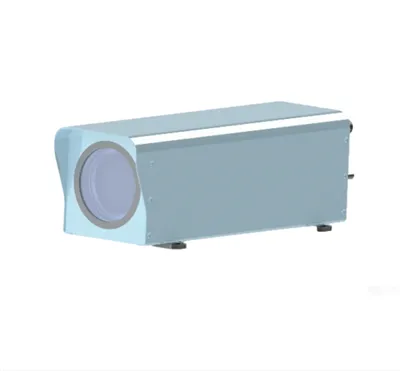
To understand how long an Anti – Drone System’s battery lasts, we first need to look at the different types of Anti – Drone Systems and their power requirements. There are mainly three types of Anti – Drone Systems: jamming – based systems, detection – only systems, and integrated systems that combine both detection and jamming capabilities.
Jamming – based Anti – Drone Systems are designed to disrupt the communication and control signals between a drone and its operator. These systems typically require a relatively high amount of power to generate the jamming signals. The power consumption of a jamming system depends on several factors, such as the frequency bands it covers, the output power, and the duty cycle.
For instance, a basic handheld jamming device that covers common drone control frequencies (such as 2.4 GHz and 5.8 GHz) with a relatively low output power (around 1 – 5 watts) may have a battery life of 2 – 4 hours. This type of device is usually small and portable, making it suitable for short – term use in security checkpoints or small – scale events.
On the other hand, a more powerful stationary jamming system that covers a wider range of frequencies and has a higher output power (up to 50 watts or more) will have a much shorter battery life if it is battery – powered. In general, such a system may run for 30 minutes to 1.5 hours on a full battery charge. However, these stationary systems are often connected to a power grid or a large – capacity external power source to ensure continuous operation.
Detection – only Anti – Drone Systems are used to detect the presence of drones in the vicinity. These systems rely on sensors such as radar, acoustic sensors, or radio frequency detectors. Compared to jamming – based systems, detection – only systems generally consume less power.
A small, battery – powered acoustic detection system, which uses microphones to pick up the sound of a drone’s motors, can have a battery life of 12 – 24 hours. This is because the acoustic sensors do not require a large amount of power to operate, and the processing of the acoustic data is relatively energy – efficient.
Radar – based detection systems, on the other hand, consume more power due to the high – frequency signals they emit and the complex signal processing required. A portable radar – based detection system may have a battery life of 4 – 8 hours, depending on the range and sensitivity of the radar.
Integrated Anti – Drone Systems that combine detection and jamming capabilities have the highest power requirements. These systems need to power both the detection sensors and the jamming modules simultaneously. The battery life of an integrated system can vary greatly depending on the specific configuration.
A medium – sized integrated system with a decent detection range and jamming power may have a battery life of 1 – 3 hours. This kind of system is suitable for temporary deployment in areas where there is a need to quickly set up an anti – drone defense.
Several factors can affect the actual battery life of an Anti – Drone System in addition to its type and power requirements.
The temperature is a significant factor. Batteries generally perform better at moderate temperatures. In cold environments, the chemical reactions inside the battery slow down, reducing its capacity and output voltage. For example, if an Anti – Drone System is used in a winter environment with temperatures below freezing, its battery life may be reduced by up to 50% compared to normal operating conditions. In hot environments, high temperatures can also cause the battery to degrade faster and may lead to a shorter overall lifespan.
The ambient electromagnetic interference (EMI) can also impact the battery life. When an Anti – Drone System is operating in an area with strong EMI, it may need to consume more power to maintain its normal operation. The system’s internal circuits may have to work harder to filter out the interference, resulting in increased power consumption.
Proper maintenance and usage patterns of the battery can also affect its longevity. For example, overcharging or deep – discharging the battery can damage its cells and reduce its overall capacity over time. To ensure the best battery performance and longevity, it is recommended to follow the manufacturer’s charging and usage guidelines.
Another important aspect to consider is the battery technology used in the Anti – Drone System. Lithium – ion batteries are the most commonly used type in modern Anti – Drone Systems due to their high energy density, long cycle life, and relatively low self – discharge rate. These batteries can provide a good balance between power output and battery life.
Compared to other battery technologies such as lead – acid batteries, lithium – ion batteries are lighter and more compact, which is an important advantage for portable Anti – Drone Systems. However, they also require more sophisticated charging circuits to prevent overcharging and overheating.
As a supplier, we are constantly working on improving the battery life of our Anti – Drone Systems. We are researching and developing new battery technologies, optimizing the power management of our systems, and improving the efficiency of our jamming and detection modules.
For example, we are exploring the use of solid – state batteries in our future products. Solid – state batteries have the potential to offer higher energy densities and better performance at extreme temperatures compared to traditional lithium – ion batteries. Additionally, we are implementing advanced power management algorithms in our systems to reduce unnecessary power consumption during idle periods.
In conclusion, the battery life of an Anti – Drone System can range from as short as 30 minutes for high – power jamming systems to as long as 24 hours for some detection – only systems. The actual battery life depends on the type of system, power requirements, environmental factors, battery technology, and usage patterns.
If you are in the market for an Anti – Drone System and have specific requirements regarding battery life or any other aspect of the system, we would be more than happy to discuss your needs. We can provide you with detailed information about our product offerings, help you choose the most suitable system for your application, and assist you in understanding the best practices for battery maintenance and usage. Contact us to start a conversation about how our Anti – Drone Systems can meet your security needs.
Optical Lenses & Optics References:
- "Handbook of Unmanned Aerial Vehicles", edited by Giacomo Singh, Springer, 2016.
- "Principles of Electronic Jamming and Countermeasures", Chang – Geng Huang, CRC Press, 2012.
- Research papers on battery technologies and power management in electronic systems from IEEE Xplore.
Xi’an Zhongke Lead Ir-Tech Co., Ltd.
We are one of the most experienced anti drone system manufacturers in China, specialized in providing high quality OEM products with the industrial grade. We warmly welcome you to wholesale high performance anti drone system at an affordable price from our factory.
Address: Building 8,Hard Technology Enterprise Community No.3000,Biyuan 2nd Rd,High-Tech Zone Xi’an,Shaanxi,China
E-mail: sales@lead-ir.com
WebSite: https://www.leadinfrared.com/
