As a supplier of die – cut products for device – to – human body adhesion, I’ve spent years delving into the intricate relationship between the adhesion force and the surface area of these specialized die – cut products. This relationship is crucial as it directly impacts the performance and reliability of devices that need to adhere to the human body, such as medical wearables, fitness trackers, and skin – attached sensors. Die-cut Products for Device-to-Human Body Adhesion

The Basics of Adhesion Force and Surface Area
Adhesion force refers to the attractive force that holds two different materials together. In the context of device – to – human body adhesion, it is the force that keeps the device firmly attached to the skin. Surface area, on the other hand, is the total area of the contact surface between the die – cut product and the human body.
At a fundamental level, there is a positive correlation between the adhesion force and the surface area. According to basic physical principles, the larger the contact surface area between two materials, the more intermolecular forces can act between them. These intermolecular forces, such as van der Waals forces, hydrogen bonds, and electrostatic interactions, are the primary drivers of adhesion.
For example, consider a simple piece of tape. A wider piece of tape will generally stick more firmly to a surface than a narrower one because it has a larger surface area in contact with the surface. The same principle applies to die – cut products for device – to – human body adhesion. When the surface area of the die – cut product in contact with the skin increases, there are more opportunities for the adhesive to interact with the skin molecules, resulting in a stronger adhesion force.
Factors Affecting the Relationship
However, the relationship between adhesion force and surface area is not always straightforward. Several factors can influence this relationship, and understanding these factors is essential for designing effective die – cut products.
One significant factor is the type of adhesive used. Different adhesives have different bonding mechanisms and strengths. For instance, pressure – sensitive adhesives (PSAs) are commonly used in device – to – human body adhesion. PSAs work by forming bonds when pressure is applied to the adhesive surface. The effectiveness of PSAs in relation to surface area can vary depending on their chemical composition. Some PSAs may require a larger surface area to achieve a certain level of adhesion force, while others can provide a strong bond with a relatively smaller surface area due to their unique molecular structure and bonding properties.
The texture and condition of the human skin also play a crucial role. The skin is not a smooth, uniform surface. It has pores, ridges, and can vary in moisture content. A rough or dry skin surface may require a larger surface area of the die – cut product to ensure sufficient contact and adhesion. Moisture on the skin can also affect the adhesion force. Excessive moisture can act as a barrier between the adhesive and the skin, reducing the intermolecular interactions and thus the adhesion force. In such cases, a larger surface area may be needed to compensate for the reduced bonding effectiveness.
The shape of the die – cut product is another important factor. A die – cut product with a complex shape may have a large surface area, but not all of that area may contribute equally to the adhesion force. For example, if a die – cut product has a lot of small, isolated protrusions, the contact between these protrusions and the skin may be less effective compared to a more continuous, flat surface. Therefore, the design of the die – cut product should be optimized to ensure that the surface area is utilized effectively to maximize the adhesion force.
Practical Implications for Die – Cut Product Design
Understanding the relationship between adhesion force and surface area has significant practical implications for the design of die – cut products for device – to – human body adhesion.
In the medical field, where the reliability of device – to – human body adhesion is of utmost importance, designers need to carefully balance the surface area of the die – cut product with other factors such as patient comfort and device functionality. For example, a medical wearable device that needs to be worn for an extended period should have an appropriate surface area of adhesion. A too – large surface area may cause discomfort and skin irritation, while a too – small surface area may result in the device detaching easily.
In the consumer electronics sector, such as fitness trackers, the design of the die – cut adhesive parts also needs to consider the relationship between adhesion force and surface area. Consumers expect these devices to stay attached firmly during various physical activities, but they also prefer a sleek and comfortable design. Therefore, die – cut products need to be designed to provide a sufficient adhesion force with a minimal surface area, which requires a deep understanding of the material properties and the relationship between adhesion and surface area.
To achieve this balance, we, as a die – cut product supplier, use advanced materials and manufacturing techniques. We work closely with our clients to understand their specific requirements and develop customized die – cut solutions. For example, we use high – performance adhesives that can provide a strong bond with a relatively small surface area. We also employ precise die – cutting processes to create products with optimal shapes and surface areas.
Testing and Validation
To ensure the quality and performance of our die – cut products, we conduct extensive testing and validation. We use a variety of testing methods to measure the adhesion force and understand how it relates to the surface area of the products.
One common testing method is the peel test. In a peel test, we measure the force required to peel the die – cut product from the skin or a skin – like substrate at a specific angle and speed. By conducting peel tests on die – cut products with different surface areas, we can establish a relationship between the surface area and the adhesion force.
We also perform shear tests, which measure the force required to slide the die – cut product parallel to the skin surface. Shear tests are important because in real – world applications, devices attached to the human body may be subjected to shear forces, such as when a person moves their arm or leg. By understanding how the adhesion force in shear relates to the surface area, we can design die – cut products that can withstand these forces.
In addition to laboratory testing, we also conduct field trials. We work with our clients to test our die – cut products in real – world scenarios to ensure that they meet the performance requirements. This feedback from field trials allows us to further optimize our products and improve the relationship between adhesion force and surface area.
Conclusion
In conclusion, the relationship between the adhesion force and the surface area of die – cut products for device – to – human body adhesion is a complex but essential aspect of product design. While there is a general positive correlation between the two, many factors such as the type of adhesive, skin texture, and product shape can influence this relationship.
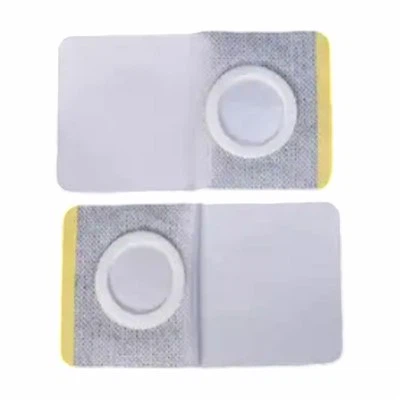
As a die – cut product supplier, we are committed to leveraging our knowledge and expertise in this area to provide high – quality solutions for our clients. By understanding the relationship between adhesion force and surface area, we can design and manufacture die – cut products that offer a strong and reliable adhesion while also considering factors such as comfort and functionality.
AED If you are in need of die – cut products for device – to – human body adhesion, we invite you to reach out to us for a procurement discussion. We are ready to work with you to develop customized solutions that meet your specific needs.
References
- Creton, C. (2017). Adhesion and Friction at Polymer Interfaces. Annual Review of Condensed Matter Physics, 8(1), 109 – 127.
- Gent, A. N. (2001). Adhesion and Adhesives: Science and Technology. CRC Press.
- Smith, J. A., & Johnson, M. R. (2015). Surface Engineering for Adhesion. Woodhead Publishing.
Shenzhen Omori Biological Technology Co., Ltd.
We’re well-known as one of the leading die-cut products for device-to-human body adhesion manufacturers and suppliers in China. We warmly welcome you to wholesale high quality die-cut products for device-to-human body adhesion made in China here from our factory. If you have any enquiry about customized service, please feel free to email us.
Address: Floor4, No43, Langkou Industrial park, Dalang Street, Longhua District, Shenzhen City, Guangdong Province, China
E-mail: wya@omorimed.com
WebSite: https://www.omorimed.com/
